Media Release: ABS Exploration Figures Reinforce Drilling Industry's Critical Role in Australia's Resource Future
2 June, 2026
The Australian Drilling Industry Association (ADIA) has welcomed the latest Australian Bureau of Statistics (ABS) mineral exploration data, which highlights the continued importance of drilling activity in underpinning Australia's resources sector and future project pipeline.
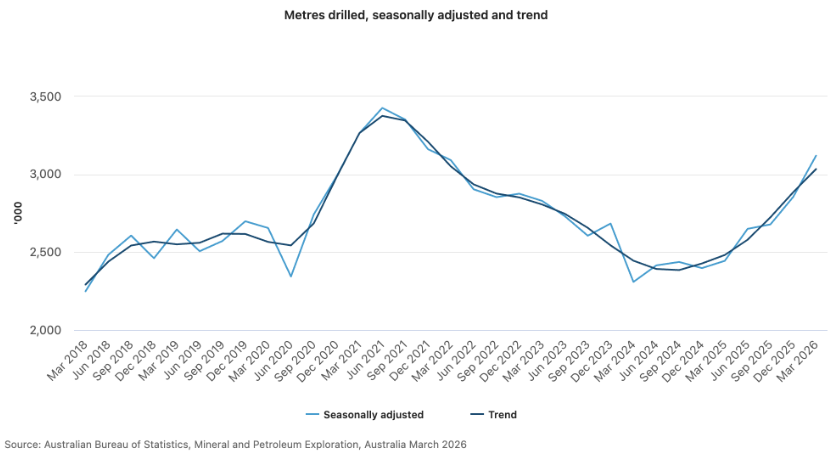
The ABS reported seasonally adjusted mineral exploration expenditure increased 6.3 percent during the March 2026 quarter to $1.094 billion, while metres drilled rose 9.3 percent to 3,120 kilometres. Mineral exploration expenditure was also up 16.1 percent year-on-year.
ADIA Chief Executive Officer Jeff Miller said the figures demonstrated the drilling sector continues to play a central role in supporting resource discovery, resource growth and future mine development across Australia.
"These results highlight the scale of activity taking place across the country's exploration sector and reinforce the essential role drilling contractors, drilling professionals and support service providers play in building Australia's future resource inventory.
"Every new discovery, resource extension, mine expansion and feasibility study begins with drilling."
The ABS data showed metres drilled increased 9.3 percent during the quarter on a seasonally adjusted basis, reflecting strong demand for drilling services across a broad range of commodities.
While drilling activity remained strong overall, the figures also highlighted the importance of maintaining a healthy balance between resource growth at existing deposits and the search for new discoveries.
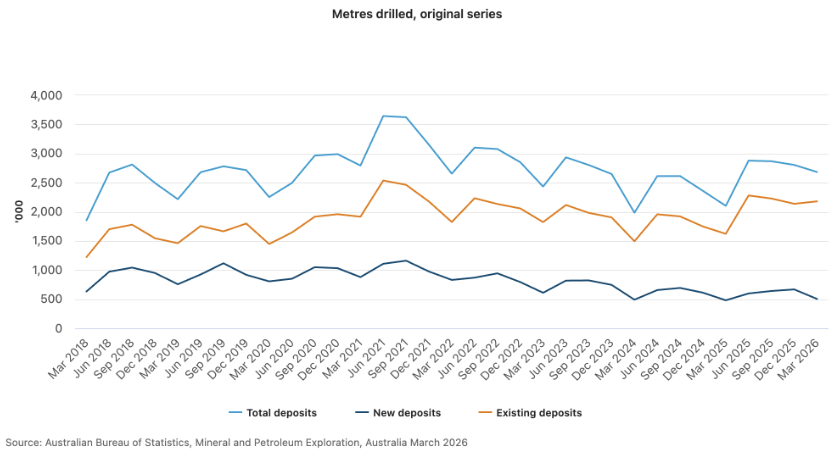
Original series data showed drilling at existing deposits increased 2.0 percent during the quarter, while drilling at new deposits fell 24.6 percent.
"The drilling industry sits at the front end of the mining value chain. Today's drilling programs create tomorrow's mines," Mr Miller said.
"Maintaining a healthy pipeline of greenfields exploration is critical if Australia is to sustain long-term mineral production and remain globally competitive."
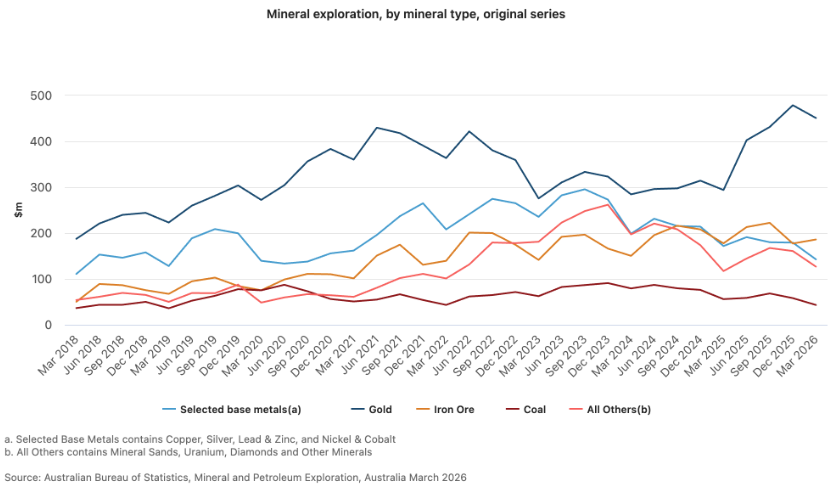
Gold remained Australia's largest exploration commodity by expenditure, while iron ore exploration expenditure increased 5.0 percent during the quarter.
Mr Miller said strong commodity prices, growing demand for critical minerals and increasing global competition for resource supply were continuing to support exploration activity.
"Australia is fortunate to possess world-class geological prospectivity across gold, copper, critical minerals, uranium and base metals. The drilling industry is the mechanism that converts that geological potential into economic opportunity."
The ABS figures also highlighted the growing scale and complexity of drilling activity required to support modern resource development, with projects increasingly requiring resource definition, geotechnical, hydrogeological and underground development drilling programs.
"Today's drilling industry is far more than simply putting holes in the ground. Our members are delivering highly specialised technical services that support exploration, mine planning, environmental management, infrastructure development and operational mining activities."
ADIA said continued investment in workforce development, training, safety and drilling innovation would be essential to ensure the sector can meet future demand.
"As Australia seeks to grow its resources sector and strengthen critical minerals supply chains, a capable and sustainable drilling industry will remain fundamental to achieving those objectives," Mr Miller said.
About the Australian Drilling Industry
The drilling industry in Australia generates nearly $4 billion in annual revenues and contributes approximately $2.2 billion to annual Gross Domestic Product. Drill contractors employ more than 12,000 Australians, supporting regional communities across the country.
Each year the drilling industry unlocks nearly $500 billion of economic activity across mining, water supply and construction.
ADIA promotes four pillars for sustained drilling industry success:
1. Reliable and Skilled Workforces
2. Business Confidence
3. Responsible Sustainability
4. Industry-led Regulation
Further details are available by contacting ADIA and in the Association's inaugural Economic Impact of Drilling in Australia Report.